
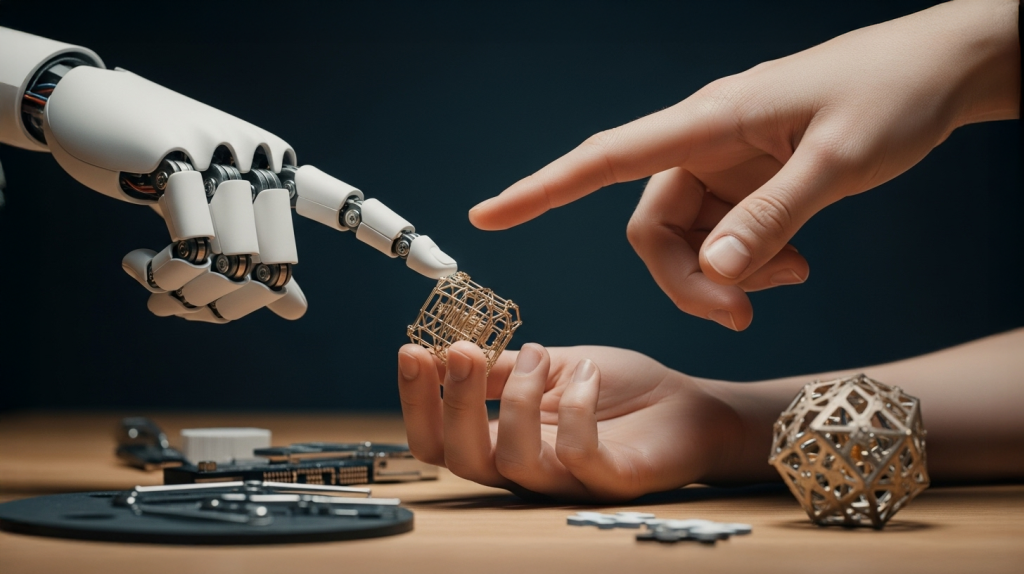
Stretchable, transparent electronics that can bend, roll, and even mimic human skin are moving closer to real-world use. A research team at the University of Turku, Finland, has developed a new way to manufacture flexible electronic materials inspired by natural structures such as tree leaves. The work could reshape how future devices are built, from smartphones to medical prosthetics.
The team, led by Assistant Professor of Materials Engineering Vipul Sharma, focused on creating electronics that are not only flexible but also sustainable. Instead of relying on conventional rigid materials, the researchers studied how nature builds lightweight yet strong structures and replicated similar patterns in engineered materials.
“We aim for high efficiency but only use environmentally friendly materials. We have developed flexible electronic materials that are stretchable, breathable, conductive, and transparent. That is why they are better than other similar materials,” says Vipul Sharma.
To test the material, the researchers developed an electronic skin and attached it to a robotic hand. The system worked as intended, with integrated pressure sensors responding to touch and enabling tactile feedback for the robot.
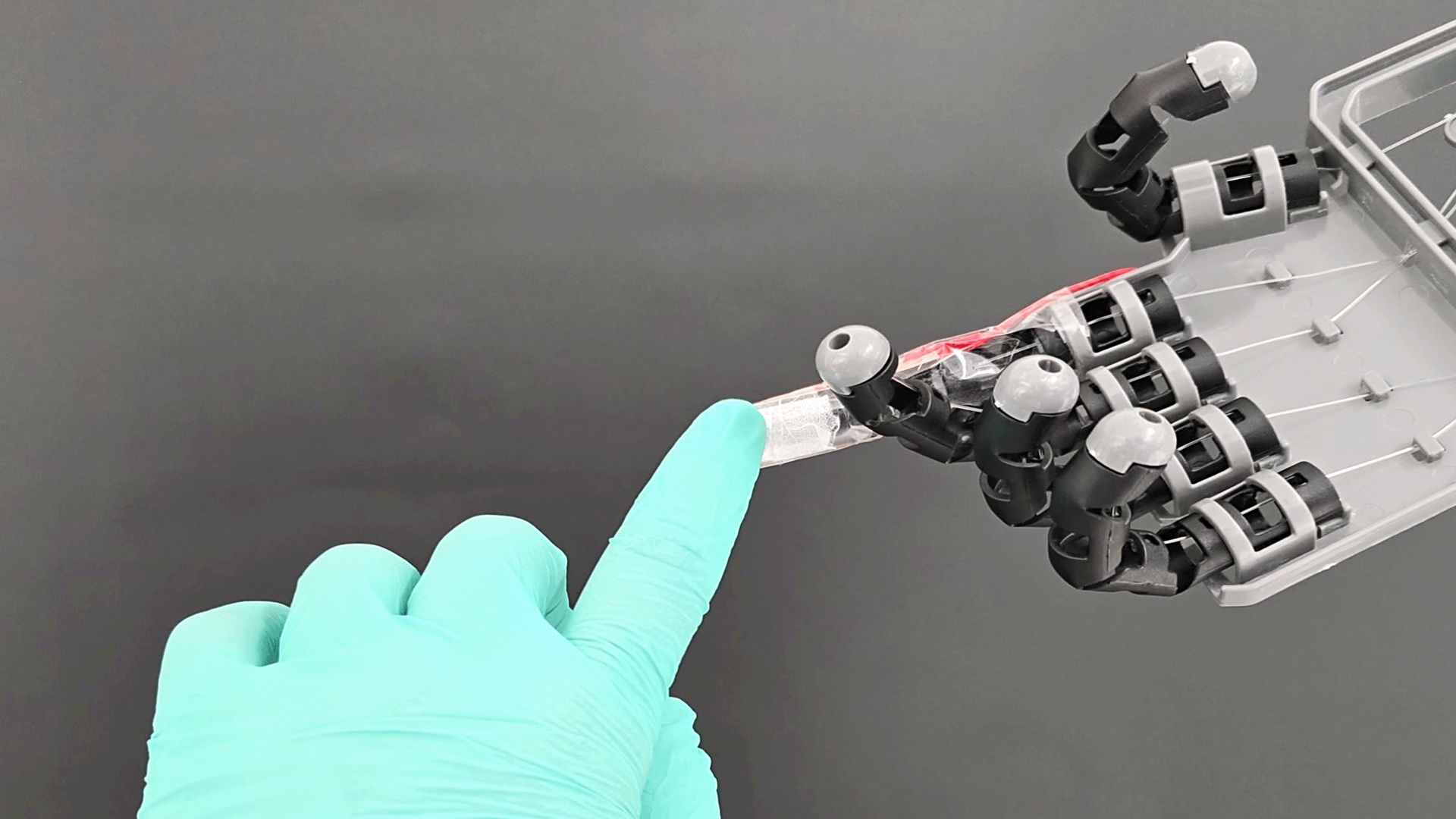
Touching the robotic skin
The researchers say this is an early step toward advanced prosthetics and human-machine interfaces. In the future, similar electronic skin could allow prosthetic users to feel pressure, temperature, and humidity, bringing artificial limbs closer to natural sensory function.
Flexible electronics are also being integrated into soft robotics, a field designed to create machines that can safely interact with humans and adapt to complex environments. These systems are being explored for use in healthcare, industry, and rescue operations.
A soft robot could handle physically demanding tasks in hospitals, such as lifting patients, while in industrial settings it could be used to move delicate objects without damage. Its flexible structure also allows it to operate in confined spaces, making it suitable for underground rescue missions and potentially even space applications.
Robots that adapt safely
“Together with my research team, we have built soft equipment that could be used for rehabilitating patients’ limbs in healthcare, for example. It is important that robots designed to assist patients are soft so that they feel comfortable and function safely,” says Anastasia Koivikko, Assistant Professor of Automation Engineering from the University of Turku, Finland, who is developing soft robots for healthcare and industry use.
Researchers are also working to replace conventional silicone-based components with more environmentally friendly alternatives. The goal is to reduce the environmental footprint of robotic systems while maintaining performance. Soft robots today can be powered by compressed air, electricity, light, or fluids, allowing movement such as expansion, bending, or jumping from confined spaces.
“Soft robots are suitable for many tasks, but they have not yet been widely commercialised. An intelligent robot could, for example, detect when fruit and berries are ripe and pick them. A soft robot can also work in environments hazardous to humans, such as a nuclear power plant with high levels of radiation,” says Koivikko.
The research group is also focusing on sustainable electronics using biomass derived from Finnish wood. The aim is to replace resource-heavy materials with locally sourced, renewable alternatives while reducing dependence on imported components.
“Forests are Finland’s oil. No other country in Europe has a similar access to timber. Currently, many of the materials used in electronics come from China. Finnish biomass has great potential on the international market,” says Sharma.

CTO Robotics
CTO Robotics is a global media and consulting company dedicated to robotics, automation, artificial intelligence, and emerging technologies. We create high-impact content that reaches engineers, decision-makers, and innovators worldwide. Through articles, videos, social media campaigns, and community-driven storytelling, we help companies showcase their technologies, strengthen their brand, and connect with the right audience. Much like Interesting Engineering or Wevolver, our mission is to bridge the gap between technology providers and industry professionals — turning innovation into visibility, and visibility into growth. 👉 Whether you are launching a new product, building your brand, or looking for global recognition, CTO Robotics is your media partner for exposure, credibility, and business opportunities.
All stories by: CTO RoboticsRelated Posts
-
 November 18, 2025
The Current Generation of Humanoid Robots — 2025









0 Comments