
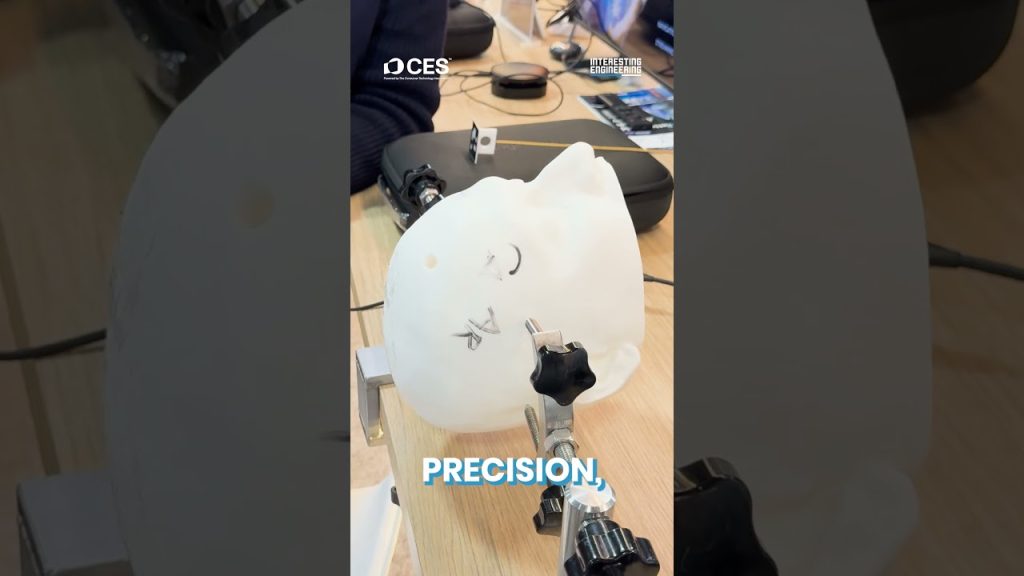
Spain-based INBRAIN Neuroelectronics has completed patient recruitment for its first-in-human study evaluating a graphene-based cortical interface.
The first-in-human study recruited ten participants, eight of whom underwent surgery using the graphene interface.
It gives surgeons the clear, detailed information they need to protect vital functions, such as speech and movement.
The device performed well throughout these procedures with no failures or safety issues, allowing researchers to collect complete, high-quality datasets from all eight surgical patients.
“The completion of patient enrollment in this first-in-human study marks an important step for INBRAIN and the field of neurotechnology,” said Carolina Aguilar, CEO and Co-founder, INBRAIN Neuroelectronics.
“Graphene has the potential to fundamentally change how we interface with the brain, enabling higher resolution of neural function-specific biomarkers, safer, and more intelligent BCI systems,” Aguilar added.
Neural mapping
INBRAIN’s graphene electrodes are a major advancement in neural technology.
Currently, the standard electrodes used are often too rigid and bulky to capture clear data for surgeries. On the other hand, graphene electrodes offer a major upgrade for brain surgery.
Graphene is often hailed as a “wonder material” made of a single layer of carbon atoms. With its flexibility, it wraps around the brain’s microscopic folds like high-tech cling film.
The newly designed graphene neural interface is ultra-thin and flexible.
Precision is vital in neurosurgery, where even a single millimeter can determine whether a patient retains the ability to speak or move.
The device uses sensitive carbon rather than metal to deliver signals that are much clearer and more precise, enabling surgeons to map and understand brain activity in real time with far greater detail.
In this study, INBRAIN’s graphene interface was tested during brain tumor surgeries to evaluate its safety and performance alongside standard surgical tools.
While the main goal was to ensure the device was safe, the study also tested how well it captured signals, its stability, and how easily it fit into a standard operating room setup.
Interestingly, the device proved highly successful, showing no safety issues or failures across all eight patients.
90-day follow-up phase
Beyond safety, the technology demonstrated its power during awake surgeries, where it successfully captured high-resolution brain signals as patients performed tasks such as naming objects.
“This study demonstrates that graphene can safely interface with the human brain, and capture neural signals with exceptional fidelity and resolution to enable precise decoding of brain and speech-related patterns metals can barely see,” said Dr. Kostas Kostarelos, Co-Founder of INBRAIN Neuroelectronics and Chief Scientific Investigator of the study.
The study, a collaboration between the University of Manchester and the Northern Care Alliance NHS Foundation Trust, is now entering its 90-day follow-up phase.
With full results expected later this year, the era of intelligent BCI therapeutics is slowly becoming a clinical reality.
INBRAIN aims to commercialize next-generation BCI systems that improve surgical accuracy and offer new treatment pathways for neurological disorders.
While this trial focused on brain tumors, the implications go much further.
Reportedly, INBRAIN is combining graphene’s abilities with Microsoft’s AI to create a system that goes beyond recording brain signals—it actually understands them.
With a new partnership at the Mayo Clinic already underway, this technology is quickly moving from a specialized surgical tool to a potential permanent solution for Parkinson’s and epilepsy.

CTO Robotics
CTO Robotics is a global media and consulting company dedicated to robotics, automation, artificial intelligence, and emerging technologies. We create high-impact content that reaches engineers, decision-makers, and innovators worldwide. Through articles, videos, social media campaigns, and community-driven storytelling, we help companies showcase their technologies, strengthen their brand, and connect with the right audience. Much like Interesting Engineering or Wevolver, our mission is to bridge the gap between technology providers and industry professionals — turning innovation into visibility, and visibility into growth. 👉 Whether you are launching a new product, building your brand, or looking for global recognition, CTO Robotics is your media partner for exposure, credibility, and business opportunities.
All stories by: CTO Robotics









0 Comments