

In an extraordinary display of Earth’s raw power, the Hayli Gubbi volcano in Ethiopia’s remote Afar region erupted on November 23, 2025, for the first time in an astonishing 12,000 years. This unexpected awakening sent an explosive plume of ash and smoke nine miles into the atmosphere, disrupting air travel across a vast swathe of the Middle East and Asia, impacting key routes between India, the UAE, and other nations. While thankfully no casualties have been reported due to the region’s sparse population, the event underscores the profound challenges and risks posed by long-dormant geological activity.
The Unexpected Threat: An Ancient Volcano’s Roar
The eruption of Hayli Gubbi, a shield volcano nestled in the highly volatile East African Rift Valley, was a stark reminder of our planet’s unpredictable nature. Ash clouds, laden with fine particles, rock, and glass, traveled thousands of miles, necessitating extensive flight cancellations and diversions. Experts are now collecting samples to verify its 12,000-year dormancy and understand the magma type, highlighting the scientific community’s constant battle to comprehend these powerful forces.
Revolutionizing Volcanic Surveillance with Robotics and AI
The extreme remoteness and hazardous conditions surrounding active volcanoes like Hayli Gubbi—an area characterized by scorching heat and rugged terrain—make traditional human-led monitoring efforts incredibly difficult and dangerous. This is where the integration of advanced robotics and artificial intelligence offers a transformative solution for proactive disaster management.
Imagine a future where autonomous systems are the first responders and constant guardians of Earth’s most volatile regions:
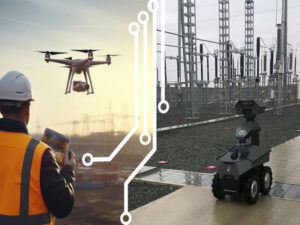
- Drones and UAVs for Aerial Inspection: Equipped with thermal cameras, gas sensors, and high-resolution imaging, robotic drones could safely conduct close-range inspections of erupting volcanoes, mapping lava flows, measuring gas emissions (like the sulfur dioxide detected at Hayli Gubbi), and assessing plume dynamics without endangering human lives. They could provide real-time data on ash cloud trajectory and density, crucial for aviation safety.
- Mobile Robots for Ground Exploration: Rugged, autonomous ground vehicles (UGVs) could navigate ash-covered, unstable terrain to deploy seismic sensors, collect geological samples, and monitor ground deformation, providing invaluable data that would be too risky for human researchers to acquire.
- AI for Predictive Analytics and Risk Assessment: Machine learning algorithms could process vast streams of data from an array of sensors—seismic, thermal, gas, satellite imagery—to identify subtle patterns and anomalies indicative of impending eruptions. AI models could forecast the likely spread of ash, predict potential lava flow paths, and assess the impact on local environments and infrastructure, offering critical lead time for mitigation efforts.
- Advanced Sensors & IIoT Integration: Robust Industrial IoT (IIoT) sensors, capable of withstanding extreme conditions, could form a comprehensive network around volcanic regions. These sensors, integrated with robotic platforms, would continuously transmit data, enabling AI systems to build ever-more accurate predictive models.
Enhancing Global Safety and Preparedness
The unexpected eruption of Hayli Gubbi serves as a powerful testament to the necessity of enhancing our capabilities in monitoring and responding to natural disasters. By leveraging AI in robotics and automation, we can not only protect human researchers and local populations but also significantly mitigate the widespread economic and logistical disruptions caused by such events. The future of volcanic surveillance is increasingly autonomous, intelligent, and proactive, ensuring greater safety and resilience in the face of our planet’s formidable power.
Connect with the CTO ROBOTICS Media Community
Follow us and join our community channels for the latest insights in AI, Robotics, Smart Manufacturing and Smart Tech.


CTO Robotics
CTO Robotics is a global media and consulting company dedicated to robotics, automation, artificial intelligence, and emerging technologies. We create high-impact content that reaches engineers, decision-makers, and innovators worldwide. Through articles, videos, social media campaigns, and community-driven storytelling, we help companies showcase their technologies, strengthen their brand, and connect with the right audience. Much like Interesting Engineering or Wevolver, our mission is to bridge the gap between technology providers and industry professionals — turning innovation into visibility, and visibility into growth. 👉 Whether you are launching a new product, building your brand, or looking for global recognition, CTO Robotics is your media partner for exposure, credibility, and business opportunities.
All stories by: CTO Robotics









0 Comments