
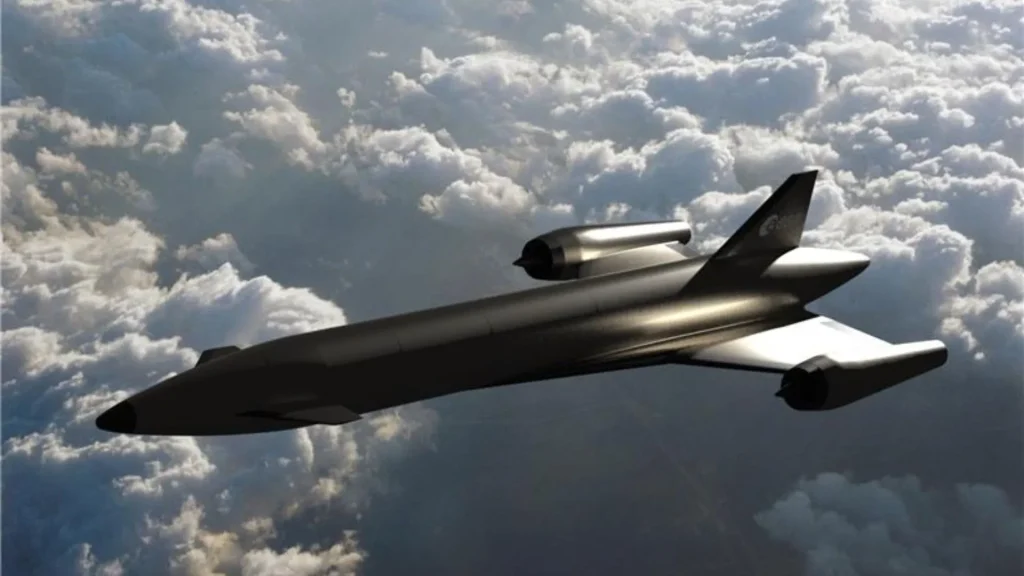
For decades, the SR-71 Blackbird represented the zenith of speed and reconnaissance, an engineering marvel that remained untouchable. Now, more than 25 years after its retirement, a new era of aerospace innovation is dawning, promising speeds of Mach 10 and beyond. At the heart of this groundbreaking development? Hydrogen-fueled scramjet engines, poised to redefine not just military capabilities but potentially commercial and space travel.
Hypersonix Leads the Charge with Green Hydrogen Propulsion
The global race for practical hypersonic aircraft is intensifying, driven by both defense imperatives and the pursuit of sustainable aerospace solutions. Among the burgeoning startups tackling this monumental challenge, Brisbane-based Hypersonix Launch Systems is making significant waves. Their focus on hydrogen-powered scramjets is not only for unmanned military systems but also envisions a future for civilian passenger travel.
Hypersonix’s collaborative efforts with NASA, the US Defense Innovation Unit, and American contractor Kratos underscore the strategic importance of their work. Their 11.5-foot DART AE demonstrator, powered by the ingenious Spartan scramjet engine, is slated for a test flight from NASA’s Wallops Flight Facility. A successful mission would mark a historic milestone: the first sustained hypersonic flight propelled by green hydrogen, a critical validation for scramjet viability.
The Power of Hydrogen: Efficiency and Advanced Manufacturing
The allure of hydrogen for hypersonic propulsion lies in its unparalleled efficiency and thermal properties. Scramjets, which compress and ignite air at supersonic speeds, become more efficient as their velocity increases. Hydrogen, with its clean-burning nature and extremely high specific energy, stands out as an ideal fuel choice for such extreme environments.
The Hypersonix Spartan engine itself is a testament to advanced manufacturing, being entirely 3D-printed from high-temperature alloys. This allows for complex geometries and lightweight, resilient structures crucial for operating between Mach 5 and Mach 12 – speeds essential for future reconnaissance and long-range strike platforms.
A Global Hypersonic Arms and Innovation Race
The push for hypersonic technology is a global phenomenon. Nations like China and Russia have already showcased significant advancements in hypersonic glide vehicles and air-launched missiles. In response, Western firms are accelerating their own research. Companies like France’s Destinus Aerospace and the US’s Hyperion Aerospace are actively developing hydrogen-powered hypersonic transport concepts, while the European Space Agency’s Invictus program explores broader propulsion technologies.
Beyond military applications, the ecosystem of high-speed R&D is also fostering commercial supersonic projects, with companies like Boom Supersonic and Spike Aerospace aiming for Mach 1.7 airliners, indirectly supporting the larger hypersonic vision.
Multi-Mission Platforms: From Defense to Space and Beyond
What sets Hypersonix apart is its ambitious goal to integrate military, commercial, and even space launch applications into a unified propulsion ecosystem. While the DART AE is a single-use demonstrator targeting Mach 7, their larger, reusable VISR platform is being designed for multi-mission defense tasks, including intelligence gathering and rapid testing of hypersonic systems. Looking further ahead, the Delta Velos concept envisions a fully reusable, scramjet-powered small-satellite launcher capable of reaching orbit with a 110-pound payload.
Achieving these feats demands breakthroughs in materials science, as hypersonic aircraft endure temperatures exceeding 1,800 degrees Celsius at Mach 10. Ceramic matrix composites and advanced high-temperature alloys are critical. Furthermore, the reliance on hybrid propulsion – typically a rocket booster – is necessary for these aircraft to accelerate to the scramjet’s operational threshold.
Overcoming Challenges for a High-Speed Future
Despite hydrogen’s promise, challenges remain, particularly in its transportation and storage, requiring complex cryogenic systems and expanded global infrastructure. However, projections indicate a dramatic drop in the cost of clean hydrogen by the early 2030s, and innovative solutions, such as hydrogen-carrying airships, are being explored for efficient delivery to remote aerospace facilities.
Military investment, mirroring past eras of aviation development, is actively fueling this progress. Support from the US Defense Innovation Unit and NASA, along with the UK Ministry of Defence, is accelerating the maturity of these technologies. While commercial hypersonic passenger travel (Mach 5+) is still a distant goal, grappling with immense safety, regulatory, and thermal-management hurdles, the path for unmanned hypersonic weapons, reconnaissance aircraft, and space-launch vehicles is rapidly solidifying.
The successor to the legendary Blackbird, likely an unmanned platform initially, is drawing nearer. With companies like Hypersonix pushing the boundaries of hydrogen propulsion, the vision of a world where Mach 10 flight is commonplace may arrive sooner than we think, ushering in an era of unprecedented speed and automation in aerospace robotics.
Connect with the CTO ROBOTICS Media Community
Follow us and join our community channels for the latest insights in AI, Robotics, Smart Manufacturing and Smart Tech.


CTO Robotics
CTO Robotics is a global media and consulting company dedicated to robotics, automation, artificial intelligence, and emerging technologies. We create high-impact content that reaches engineers, decision-makers, and innovators worldwide. Through articles, videos, social media campaigns, and community-driven storytelling, we help companies showcase their technologies, strengthen their brand, and connect with the right audience. Much like Interesting Engineering or Wevolver, our mission is to bridge the gap between technology providers and industry professionals — turning innovation into visibility, and visibility into growth. 👉 Whether you are launching a new product, building your brand, or looking for global recognition, CTO Robotics is your media partner for exposure, credibility, and business opportunities.
All stories by: CTO RoboticsRelated Posts
-
 August 6, 2025
Logistics and Warehousing Automation











0 Comments